

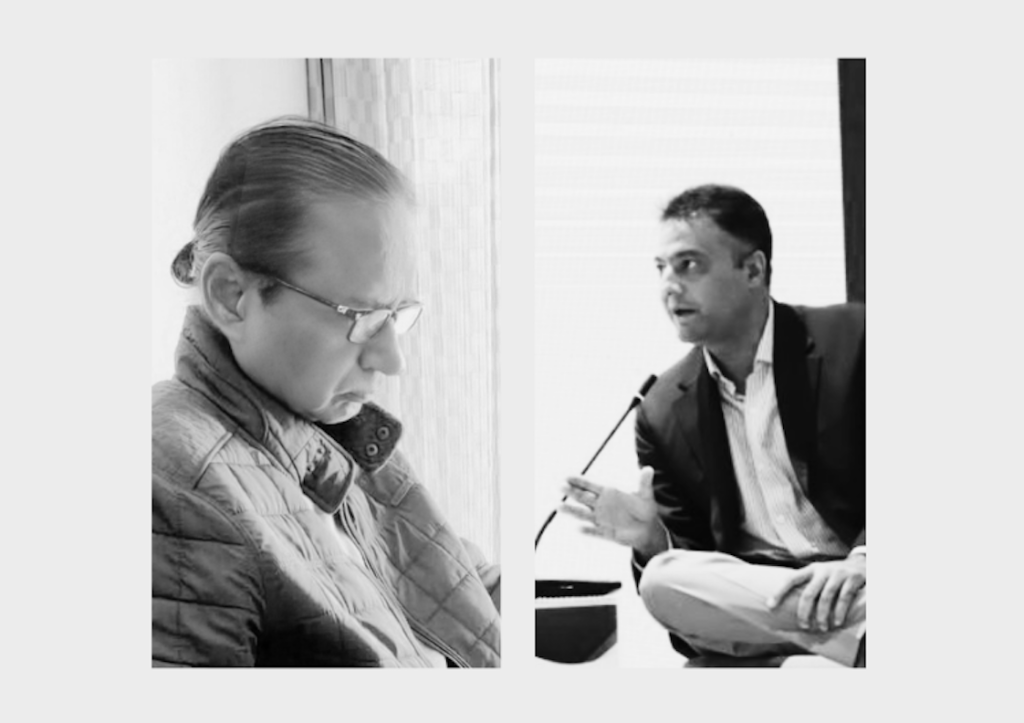
Recently, I put down my views regarding the National Finance Commission Award that were processing in my mind since 2017. When I shared this piece of writing in a WhatsApp group (3 June 2026), a debate ensued between a friend, Shahid Mehmood, an economist by training, and me. I am copying the debate below with due permission from Shahid Mehmood.
Dr Khalil:
Principles and proposals- Way forward for a new and just NFC award
In July 2017, an Islamabad-based think tank, Policy Research Institute of Market Economy (PRIME Institute), held a meeting, and I was part of it. It was a working group that deliberated on the dynamics of the NFC awards. I was merely an observer participant.
During the proceedings, I expressed my astonishment at the principle on which the NFC was built. I asked, “Why are the larger provinces required to provide for Balochistan and KPK? What is the principle that obliges Punjab and Sindh to share their revenue with Balochistan and KPK? Is this a welfare principle? Or is it a charity principle? Why is it so?
To this, Dr Kaiser Bengali, who was a member of the working group, explained that ‘fiscal equalization is inherent in fiscal policy and is recognized as public finance theory. It does not need to be justified.’ [See the minutes/report of the working group.]
I differed and proposed that there should be an economic principle, a rational principle that could make those responsible and accountable to whom is given, and fiscal equalization must be based on such a principle.
Link to the article:
https://pakpoliticaleconomy.com/principles-and-proposals-way-forward-for-a-new-and-just-nfc-award-2/
Shahid Mehmood:
Good question Dr Sb. Now flip the question around and ask why are Baluchistan and KP required to provide natural resources like gas and oil at below market prices to larger provinces and the center, or to finance their schemes which have no relevance or advantage to them, and why should they pay for the follies of the center? Few cases in point- Baluchistan’s Sui was the major provider of natural gas to all of Pakistan from it’s discovery in early 50s to late 1990s when production from Sindh became the major source. All that time, natural gas was deliberately under-priced while Baluchistan couldn’t even use its own resource (the first gas connection in Quetta, let alone Baluchistan, was in 1984). Who made the pricing and distribution decisions? Second case- Gas Infrastructure Development Cess (GIDC) was opposed by three smaller provinces as their production was in surplus to their requirements and they already had a reasonable infrastructure to meet their needs. So why was it pushed through despite their opposition and to benefit whom? I can give many more examples of how provinces like KP and Baluchistan are at the receiving end of Centre and Rawalpindi’s follies, like the jihadi infrastructure built over decades, military operations and it’s negative spillovers to their economy and society. In essence, these are some of the considerations that should be kept in mind while addressing this issue. By no means am I defending the governance quality of KP or Baluchistan, which is average or poor, but just putting across the point that one has to keep the historical context in mind 🙏🏽
Dr Khalil:
Agreed 💯%
Dr Khalil:
I’m already in favour of maximum provincial autonomy to the extent of 6-points.
Dr Khalil: But…do you agree with what I have proposed.
Shahid Mehmood:
The short answer is that I am in favor of empowered cities/districts with fiscal and pricing power over their resources. I’ve reached this conclusion after having contemplated this whole issue of center vs. provinces. The provinces did realize substantial fiscal bounty as well as increased independence in the post 18th Amendment era. But they’ve largely wasted it since they are as incompetent as Islamabad+Pindi. So, as I had noted in my recent thread on NFC, basically this whole hullabaloo over ‘resource distribution’ is a struggle between two extremely unproductive, incompetent and over-sized leviathans rather than anything to do with ‘welfare’, which to folks like Dr Bengali means dishing out fiscal freebies.
Dr Khalil:
I respect your opinion.
But wouldn’t that bring that incompetence and wastefulness down to the level of the cities/districts?
We already witnessed a trailer of that during the General Mush local bodies workings.
I fear that would spread the rot presently rampant at the federal and provincial levels to the level of cities/districts.
Have you watched the movie, Rambo: First Blood?
Shahid Mehmood:
When each city and district has to pay for itself and also feel the pinch, then it’ll induce a modicum of responsibility and thought. The issue with centralized structures is that cities then ‘outsource’ their own responsibilities. Take electricity, for e.g. Let each city or district for it’s own arrangements , whether buying electricity from competing sellers, upgrading their lines, etc. Centre’s regulations would be required in cases of probable externalities of one place on another, as in the case of sharing water.
Another member from the WA group:
I think that is again a myth propogated in Islamabad.
Karachi or Lahore have populations greater than half of Canada or Australia let alone the tiny cointries of Europe.
Dr Khalil:
[Addressing the other member]
I’m from Lahore 😃. It’s not a myth. At least I have certain arguments to support it.
I think it’s not about the size of the population. I don’t rest my case on it.
@Shahid Mehmood
My argument is about the political power, desperately sought after by most of the people, and the overall sense of security, etc., attached to it. And, about the fact that political power corrupts at whatever level it is distributed and exercised. And how the centers of entrenched political power (political parties, religious groups) crave the power at any level, be it the local level. For example, how the MPAs back then downgraded (upgraded) themselves to opt for the mayorship, etc.
So, I prefer to go back and trust and entrust the bureaucracy, but the only precondition is no political interference. No doubt, it’s a bureaucratic-representative mix.
I am not against bureaucracy as such. The issue is not with them. The issue is with politicians and political interference.
In case I accept the cities/districts as independent centers of governance, the question is how to ward off the political interference.
Shahid Mehmood:
So basically what you are saying is that it’s a cultural issue, which I agree. And that’s b/c of the poor incentive system. Otherwise these same folks follow the law to the letter in UAE just half an hour from here. It’s system design that matter. 78 years of trying centralized rule, it’s time we give the decentralized system it’s fair due. Yes there’ll be issues, but they can’t be bigger than what we’ve had to endure in 78 years.
In response to which I used 👍🏼, meaning a general agreement.
[4 Jun. 2026]